
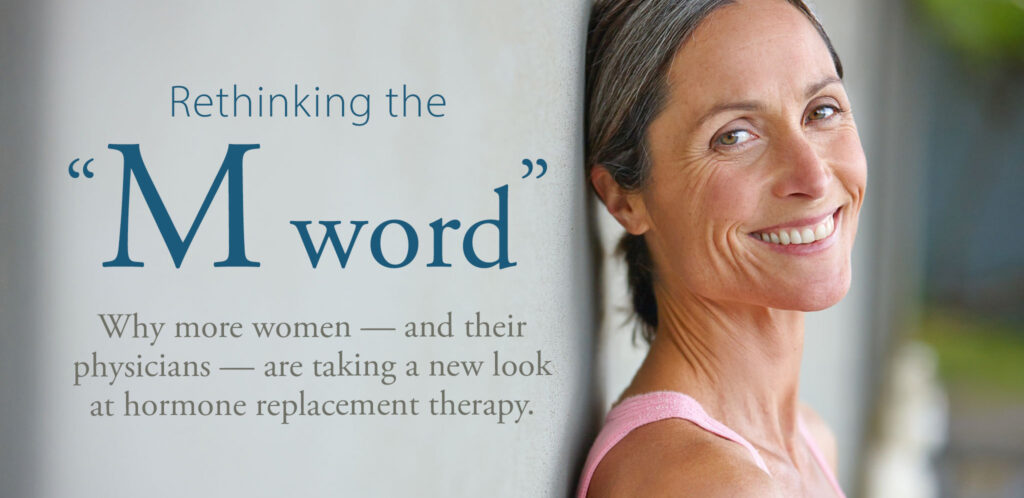
After years of controversy and caution surrounding hormone replacement therapy, new research and updated clinical guidance are driving a major shift in menopause care. Here’s what women — and their physicians — are reconsidering about HRT today.
For nearly two decades, hormone replacement therapy carried a stigma powerful enough to reshape an entire generation of menopause care. Women abandoned treatment. Physicians grew cautious. Many patients simply learned to tolerate disruptive symptoms in silence.
Now, researchers and clinicians are revisiting that narrative.
“For many years, the conversation around hormone therapy was driven by fear and incomplete understanding,” said Dr. Sarah Mitchell, OB-GYN and menopause specialist. “What we know now is that hormone therapy is not one-size-fits-all. For the right patient, at the right time, it can significantly improve quality of life.”
As new analyses emerge and menopause care becomes more individualized, hormone replacement therapy is experiencing a resurgence. For many women struggling with symptoms that affect sleep, mood, relationships, and daily functioning, the renewed conversation offers something that has long been missing: options.
A Generation of Women Left in Limbo
In the early 2000s, the landmark Women’s Health Initiative (WHI) study dramatically altered public perception of HRT after early findings suggested increased risks of breast cancer, stroke, and cardiovascular disease. Prescriptions plummeted almost overnight. Millions of women stopped treatment or avoided it entirely.
But over time, researchers began to recognize an important detail: the original study population did not reflect many of the women most commonly seeking menopause treatment today. Many participants were older, often more than a decade past menopause, and using formulations less commonly prescribed now.
Since then, newer analyses and clinical reviews have painted a far more individualized picture of hormone therapy — one that considers age, timing, health history, dosage, and method of delivery.
Why Interest in HRT Is Growing Again
For many women, menopause symptoms are far more than an inconvenience. Hot flashes, night sweats, insomnia, anxiety, joint pain, brain fog, vaginal dryness, and mood changes can significantly affect sleep, relationships, careers, exercise, and emotional well-being.
Hormone therapy remains one of the most effective treatments available for moderate to severe menopausal symptoms. Current guidance increasingly supports the idea that healthy women under age 60 — or within roughly 10 years of menopause onset — may experience benefits that outweigh the risks when therapy is carefully individualized.
Researchers are also continuing to study potential benefits related to bone density, cardiovascular health, and cognitive health, although experts caution that these areas remain complex and should not be oversimplified.
For some women, the impact can be profound.
“I wasn’t sleeping. I couldn’t focus at work, and I honestly felt like I had lost myself,” said Lisa, a patient who began hormone therapy at age 52. “Within a few months, I felt clearer, calmer, and more like me again. It wasn’t about vanity — it was about functioning.”
What Has Changed Since the Early Studies?
One of the biggest changes is understanding that “HRT” is not a single treatment.
Today’s therapies include:
- Estrogen patches
- Low-dose oral medications
- Gels and sprays
- Vaginal estrogen creams, tablets, and rings
- Bioidentical hormone options
- Combination estrogen-progesterone therapies
Delivery method matters. For example, transdermal estrogen patches may carry lower risks of blood clots and stroke than older oral formulations because they bypass the liver.
Timing matters, too. Researchers increasingly refer to a “window of opportunity” — the idea that initiating therapy earlier in menopause may produce different outcomes than starting many years later.
The Conversation Is Becoming More Balanced
Recent FDA actions and updated medical discussions have reflected this evolving understanding. In 2025 and 2026, regulators moved to revise longstanding warning language on several menopausal hormone therapies, citing the need for more individualized risk-benefit discussions rather than broad, one-size-fits-all warnings.
At the same time, many physicians emphasize that hormone therapy is not appropriate for everyone. Women with certain histories — including some hormone-sensitive cancers, clotting disorders, stroke risk factors, or uncontrolled cardiovascular disease — may still need alternative approaches.
That nuance matters.
The emerging message is not that hormone therapy is “good” or “bad.” Rather, it is that menopause care deserves individualized, evidence-based conversations instead of fear-driven assumptions.
More Than Symptom Relief
Perhaps one of the most important shifts is cultural.
Women are increasingly speaking openly about menopause in workplaces, healthcare settings, social media, and personal relationships. Celebrities, physicians, researchers, and advocates have helped push menopause out of the shadows and into mainstream health discussions.
For many women, seeking treatment is no longer viewed as vanity or weakness. It is increasingly recognized as a legitimate form of healthcare and quality-of-life support.
Menopause is not a disease. But suffering in silence should not be considered inevitable either.
A Decision That Should Be Personal
Hormone therapy is deeply personal, and no single approach fits every woman. The best decisions come from informed conversations with qualified healthcare providers who understand current evidence, individual health history, symptom severity, and personal preferences.
Not every woman chooses hormone therapy. For some women, hormone therapy can be life-changing. For others, non-hormonal therapies, lifestyle changes, or alternative treatments may be a better fit — and experts emphasize that’s equally valid.
“I researched it carefully and discussed it with my doctor but ultimately decided it wasn’t the right choice for me,” shared Kim, age 49. “I’ve focused more on exercise, sleep, nutrition, and non-hormonal treatments, and that approach has worked well for me … so far.”